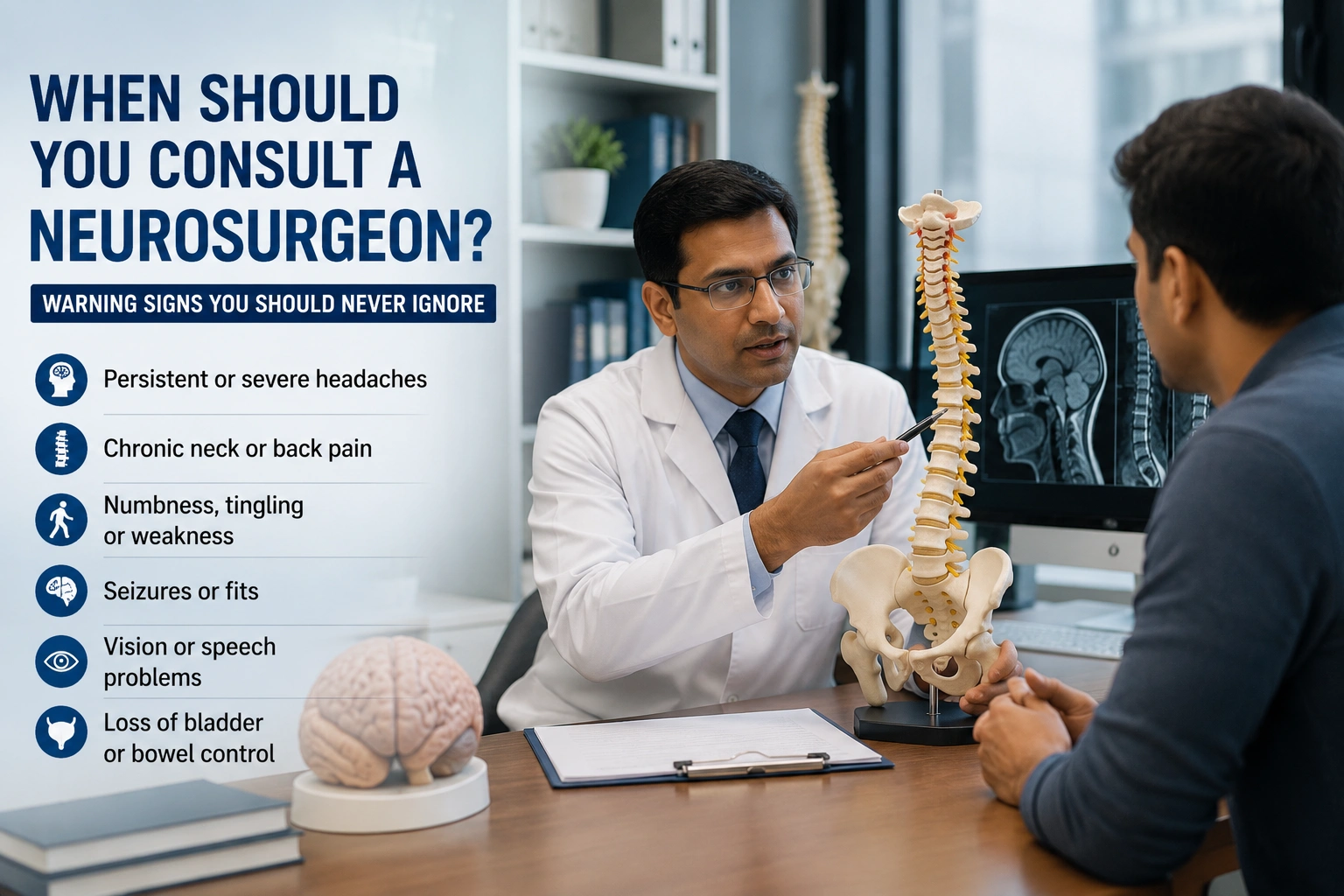
The brain, spine, and nerves control almost every function of the human body. Persistent headaches, back pain, weakness, numbness, or balance problems should never be ignored, as they may indicate an underlying neurological condition. Consulting an experienced neurosurgeon at the right time can help prevent complications and improve treatment outcomes.
Who is a Neurosurgeon?
A neurosurgeon specializes in diagnosing and treating disorders affecting the brain, spine, peripheral nerves, and spinal cord. While many neurological conditions can be managed without surgery, a neurosurgeon evaluates each patient carefully and recommends the most appropriate treatment plan based on the diagnosis.
Warning Signs You Should Not Ignore
- Persistent or severe headaches
- Chronic neck or back pain
- Pain radiating to the arms or legs
- Numbness or tingling in hands or feet
- Muscle weakness
- Difficulty walking or maintaining balance
- Frequent seizures
- Loss of bladder or bowel control
- Sudden speech or vision problems
Conditions Treated by a Neurosurgeon
- Brain Tumors
- Slip Disc
- Sciatica
- Spinal Stenosis
- Cervical Spondylosis
- Brain Aneurysm
- Epilepsy
- Parkinson's Disease
- Trigeminal Neuralgia
- Stroke-related Disorders
How is the Diagnosis Made?
A neurosurgeon performs a detailed neurological examination and may recommend MRI, CT scan, X-rays, or nerve conduction studies to identify the exact cause of symptoms before planning treatment.
Treatment Options
Treatment depends on the condition and severity of symptoms. Many patients improve with medication, physiotherapy, rehabilitation, and lifestyle changes. When surgery becomes necessary, advanced minimally invasive and microsurgical techniques help reduce pain, shorten hospital stay, and speed up recovery.
Benefits of Early Consultation
- Early diagnosis
- Prevention of permanent nerve damage
- Better recovery outcomes
- Less invasive treatment options
- Improved quality of life
Conclusion
Ignoring neurological symptoms may delay treatment and increase the risk of complications. If you experience persistent headaches, severe back pain, weakness, numbness, or seizures, consult an experienced neurosurgeon for timely evaluation. Early diagnosis and personalized treatment can help you recover faster and maintain a better quality of life.