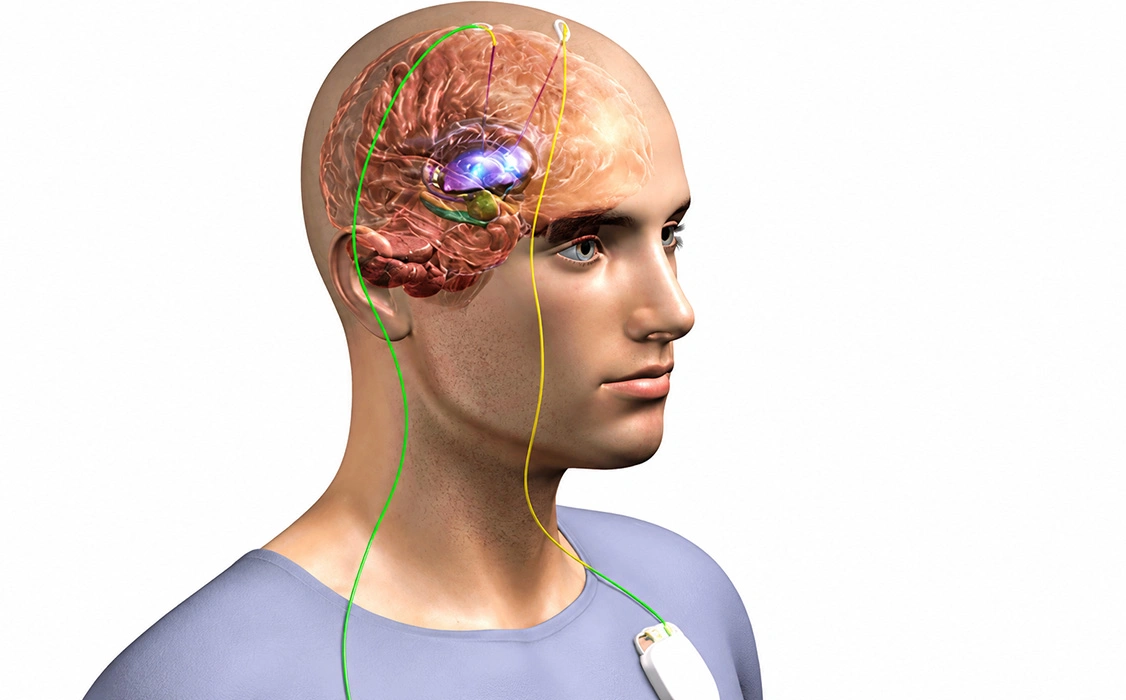
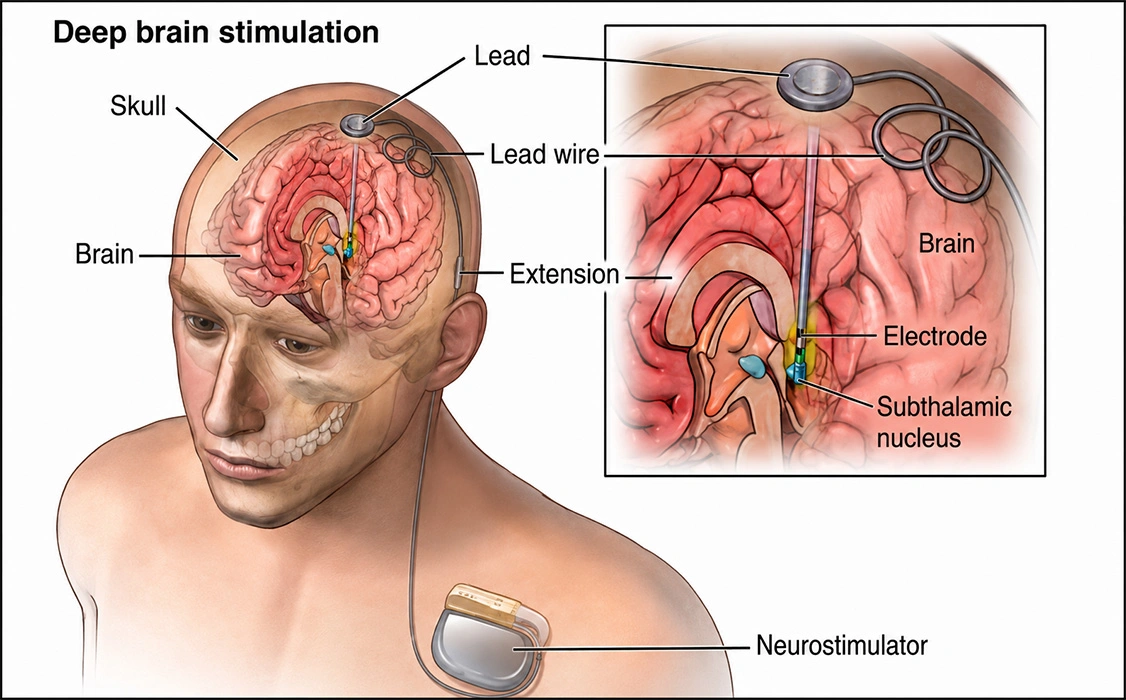
Deep Brain Stimulation, usually called DBS, is a surgical procedure where small electrodes are put in certain areas of the brain. These electrodes then send controlled electrical signals, that help to regulate weird or abnormal brain activity linked to some neurological symptoms. DBS generally does not cure the underlying problem, but it can meaningfully help with symptom control especially in patients who are chosen carefully. You’ll most often see it used for Parkinson’s disease, essential tremor, dystonia, and other movement disorders, when medications alone stop giving enough relief.
The shaking of hands, arms, or other body parts that lasts even after taking medication and has an impact on the daily routine.
A time of good control of symptoms and worsening symptoms disrupts normal daily routines and independence.
Stiffness that persists affects mobility, comfort, and the ability to carry out everyday tasks with ease.
Uncontrolled body movements can develop as a result of the illness or as a result of the long-term use of medication.
Walking difficulties and balance issues increase the chance of falling and reduce confidence.
The symptoms continue to affect working and independence, social activities, and daily activities despite treatment.
Not every person with a movement disorder really needs DBS. A careful evaluation helps, kind of, decide if the procedure might give a worthwhile improvement. The review looks at symptom intensity, how well the patient responds to medication, general wellness, and what the patient wants to achieve with treatment.
Dr. Rohan Sinha goes through the patient’s medical history, their neurological situation, and how earlier therapies worked. Brain imaging, neurological examinations, and a few other investigations may be suggested to better confirm DBS eligibility and form a tailored treatment plan.
Recovery is not the same for every patient; it kinda shifts depending on what condition is being treated. Most people still need regular follow-up appointments after surgery so the team can keep an eye on how things are going and fine-tune the DBS settings for the most helpful results.
Dr. Rohan Sinha watches the recovery closely and also tracks treatment response, so patients can step by step adapt to the therapy. This continuing follow-up is pretty important too, for maintaining long-term symptom control and getting better day-to-day functioning overall.
A movement disorder can impact everything from writing and walking to working and achieving personal autonomy. The doctor. Rohan Sinha provides comprehensive assessment as well as the most advanced DBS treatments for those who are not sufficiently controlled by medications by itself. Each patient is subject to a thorough examination prior to treatment being recommended. His goal is to assist patients get better control of their symptoms along with improved mobility and a more active life with individualized neurologic treatment and the latest surgical techniques.
Real feedback from patients and families who trusted our care.
Find answers to common questions about Deep Brain Stimulation (DBS), the conditions it treats, eligibility, and what patients can expect from treatment.
DBS is a surgical procedure that uses implanted electrodes to help control symptoms caused by certain neurological and movement disorders.
DBS is commonly used for Parkinson's disease, essential tremor, dystonia, and selected neurological conditions that do not respond adequately to medication.
No. DBS helps manage symptoms and improve quality of life, but it does not cure the underlying neurological condition.
DBS is a well-established procedure performed after a detailed evaluation. The risks and benefits are carefully discussed before treatment.
Eligibility is based on symptom severity, response to medication, neurological evaluation, imaging studies, and overall patient health.
Schedule your consultation with Dr. Rohan Sinha and locate our clinic easily through the map below.