Parkinson’s disease is a type of neurological disorder that affects the body's motor functions. In most cases, the symptoms come on gradually and vary from one individual to another. While some people may observe a tremor of the hand, others may experience stiffness, slowing of movements, and loss of balance. With time, the activities become more difficult to perform, taking more time than usual. Though there is no cure for Parkinson’s disease, proper management of the disease is possible with the right treatment approach.
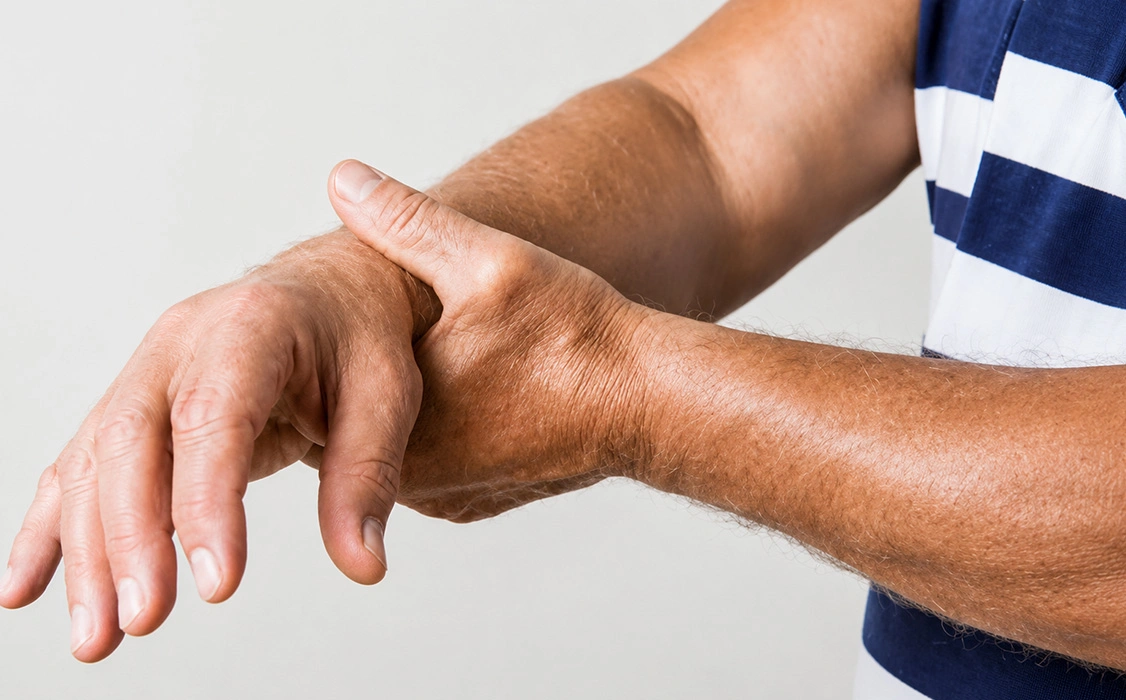
You may notice your hands shaking, which is often one of the very first indications.
Daily tasks can be more time-consuming than they were previously, and they've been dragged out.
The legs, arms, or even the neck may be tight and feel rigid.
While walking or standing, individuals may feel shaky and feel as if the ground is moving.
The pace of walking may slow down, with shorter strides, and a greater cautiousness.
Your handwriting may shrink slowly and appear less distinct than it was before.
The face could appear calmer or perhaps not as expressive as it usually is.
The voice may become soft or less clear than normal.
As people get older, the risk of Parkinson's disease seems to rise.
If there is a family history, it can make developing the condition more likely.
Some inherited changes or unusual genetic shifts may nudge the risk upward.
Long-term exposure to certain toxins may increase a person’s vulnerability.
Parkinson's disease shows up a bit more often in men than in women.
In a lot of cases, there isn’t one single cause that can be pinned down.
Not all patients with Parkinson’s disease need surgery. Before even thinking about a surgical approach, it really helps to grasp how the symptoms are messing with everyday life, and also how the person responds to medication. A careful, detailed check is what usually shows if surgery is apt to bring real, measurable benefit, not just “maybe” improve things.
Dr. Rohan Sinha goes through the patient’s medical history, the way symptoms come and go, medication response, and the general neurological condition. Brain imaging, along with a few other assessments, may be suggested so the team can judge surgical readiness and craft a personalized treatment plan.
Parkinson's disease can impact all aspects of life, from mobility and equilibrium to autonomy and self-confidence. The doctor. Rohan Sinha provides comprehensive evaluation and more advanced surgical treatments for patients who are not effectively controlled by medication by itself. Each patient receives a thorough evaluation before treatment is suggested. The goal of the doctor is to help patients improve their symptom control while maintaining mobility. He also helps patients enhance their health through individual neurologic care.
Real feedback from patients and families who trusted our care.
Find answers to common questions about Parkinson’s disease, its symptoms, diagnosis, treatment options, and when Parkinson’s surgery may be recommended.
Parkinson's disease is a neurological condition that affects movement, balance, coordination, and muscle control due to changes within the brain.
Common symptoms include tremors, stiffness, slowed movement, balance problems, walking difficulties, speech changes, and reduced facial expression.
Deep Brain Stimulation is a surgical treatment that uses implanted electrodes to help control certain Parkinson's disease symptoms.
No. Surgery is recommended only after detailed evaluation and is usually considered when symptoms are not adequately controlled with medication.
Yes. Suitable patients may experience better symptom control, improved mobility, greater independence, and an overall improvement in quality of life.
Schedule your consultation with Dr. Rohan Sinha and locate our clinic easily through the map below.