A herniated disc develops when the soft, inner part of a spinal disc presses outwards and starts pressing onto nearby nerves. Some patients may have localized neck or back discomfort, while other sufferers experience symptoms that extend into the legs or arms. The severity of the pain can range from mild discomfort to a symptom that hinders the work schedule, sleep, and daily activities. A lot of patients manage the discomfort by themselves until symptoms become more difficult to ignore. If nerve-related pain starts to affect the ability to move or perform daily activities, an evaluation by a doctor can assist in determining the most suitable treatment approach.
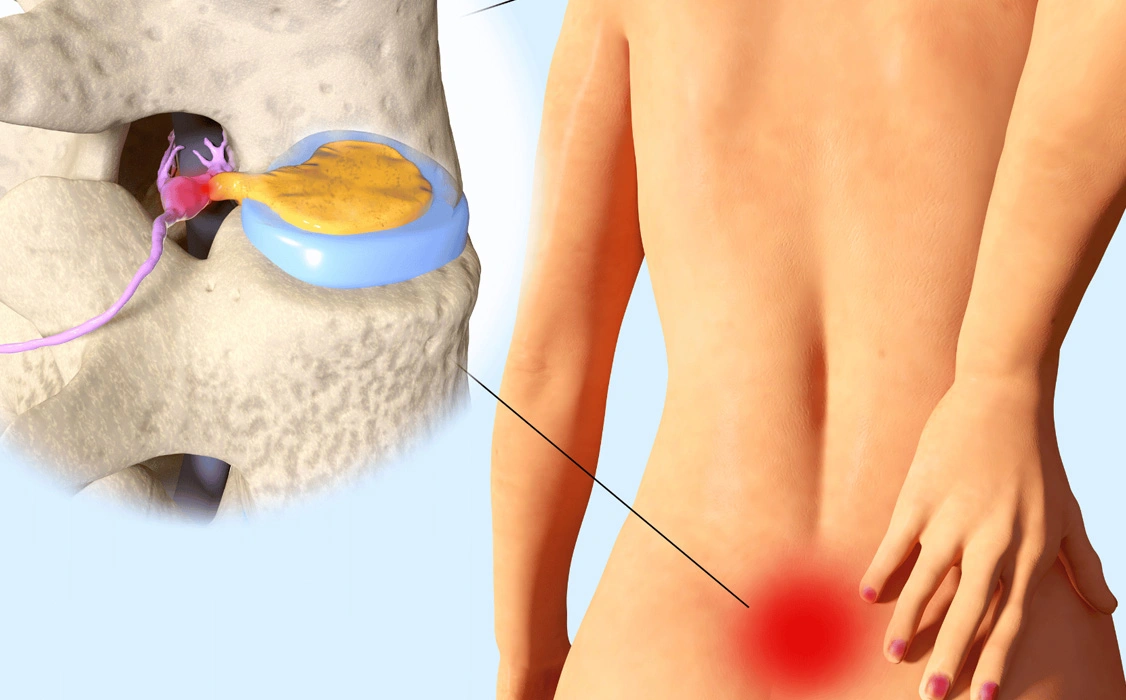
A persistent discomfort could develop around the area of pain.
The irritation of the nerve may cause pain and discomfort that extends beyond the spine.
The sensation is diminished in the muscles.
The sensation of pins and needles is a typical sign.
The muscles affected may feel less strong than normal.
Prolonged sitting can cause more discomfort.
The act of lifting, bending, or walking could cause discomfort.
Every day activities can be more difficult.
Discs are naturally less flexible with time.
A wrong lifting technique can put too much tension on the spinal discs.
Stress can be repeated, which could lead to disc degeneration.
Unpredictable movement can cause disc pressure to increase.
In the long run, posture problems can affect the health of your spine.
A higher weight load puts more pressure on the spinal column.
Physical trauma can lead to disc issues.
The weakness of the supporting muscles can cause a greater strain on the spine.
Herniated discs may have varied symptoms. Some experience more pain while others experience numbness, tingling, or even muscle weakness as a result of nerve compression. It is important that there is an understanding of how the disc is causing an effect on the surrounding structures for effective treatment.
Dr. Rohan Sinha takes his time in assessing the symptoms of the patient, their physical impairments, and also their nerve-related issues. In cases where necessary, MRI scans are conducted to find the location of the affected disc.
A disc herniation is more than just physical comfort. Instant pain, restricted mobility, and other symptoms related to nerves could cause problems with sleep, work, traveling, and daily activities. The doctor, Dr. Rohan Sinha, focuses on diagnosing the extent of the disc issue and then recommending the best treatment for the specific needs of the patient. His treatment focuses on helping patients recover from pain, increasing mobility, and assisting patients in getting back to their daily routine without fear.
Real feedback from patients and families who trusted our care.
Find answers to common questions about herniated discs, their symptoms, causes, diagnosis, treatment options, and when specialist care may be needed.
Yes. The terms herniated disc and slipped disc are often used interchangeably to describe a spinal disc that is pressing on nearby nerves.
Many patients improve with medication, physiotherapy, and activity modification. Surgery is considered only when symptoms remain severe or continue to worsen.
Yes. A herniated disc in the lower back can irritate nearby nerves and cause pain that travels down the leg.
Diagnosis usually involves a clinical evaluation and imaging studies such as MRI scans to determine the location and severity of the disc problem.
If pain is persistent, affecting daily activities, or accompanied by numbness, tingling, or weakness, specialist evaluation is recommended.
Schedule your consultation with Dr. Rohan Sinha and locate our clinic easily through the map below.