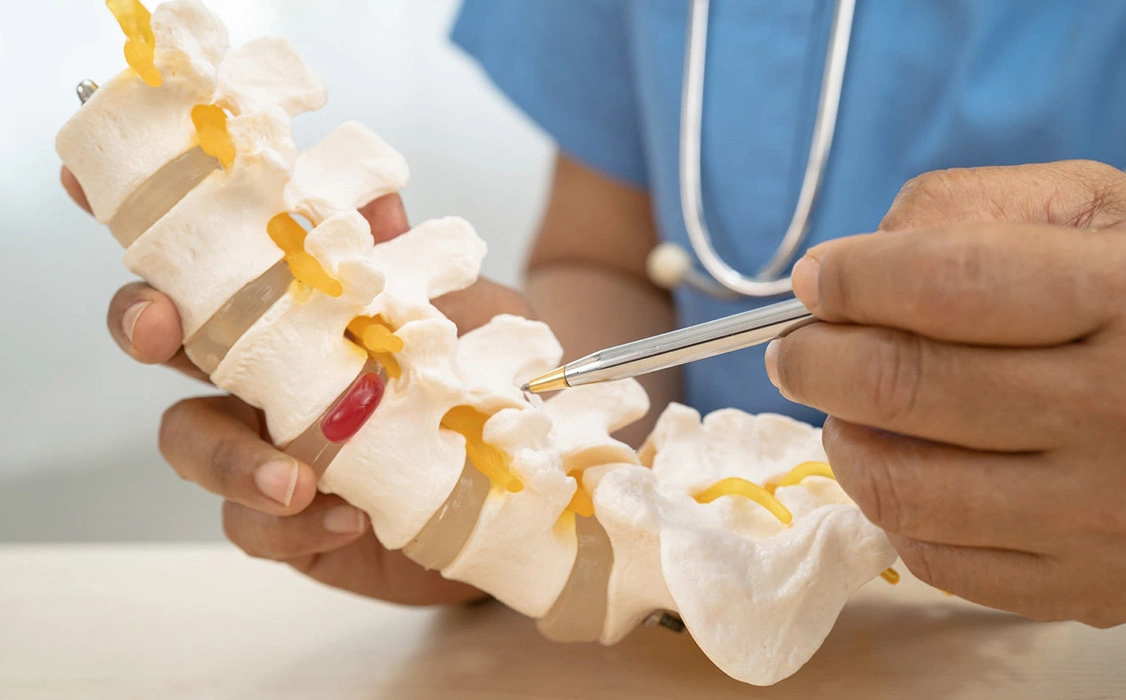
A disc may become slipped if one disc within the spine begins putting tension on nerves nearby. In many cases, it isn't the disc but the signs it triggers constant neck or back discomfort, pain that extends to the leg or arm, as well as tingling or a feeling of numbness. A few people experience discomfort following the lifting of something heavy, and others experience symptoms slowly as time passes. When the tension on nerves grows, daily activities like walking, sitting, or sleeping at a comfortable level can be difficult, which makes prompt treatment essential.
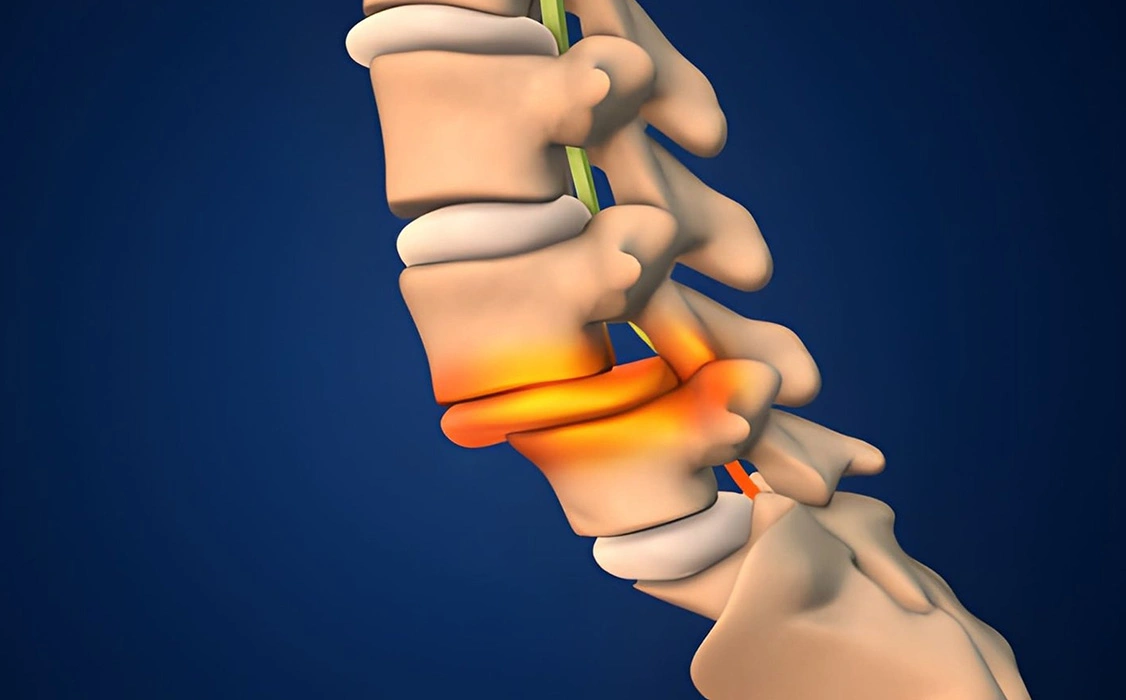
Pain that does not subside even after taking adequate rest or drugs.
Dislocation of the neck disc causes pain in the neck.
Problems with the discs in the lower back may cause pain extending to the legs.
Dislocations of neck discs can cause pain to extend towards the arm.
Tingling sensations can be felt in the limbs of the body.
Numbness can occur due to injury in the concerned body part.
Body parts like the arm and leg may become weaker.
Difficulties in activities such as bending, lifting, and walking may arise.
Discs slowly lose strength and flexibility over time.
Incorrect lifting techniques could put an excessive amount of pressure on the spine.
Unexpected movements can strain the discs of the spine.
In the long run, posture issues can cause disc strain.
Physical stress over time can cause spinal muscles to weaken.
The additional weight puts more pressure on discs.
Physical injuries could cause disc damage.
The weak muscles supporting the spine can put more strain on the spine.
The vast majority of patients with slipped discs have the same set of symptoms. Patients may have pain in their back or neck, while others may be suffering from numbness or weakness of nerves in their legs or arms. The impact of the slipped disc on nerves can guide Dr. Rohan Sinha in selecting the most suitable treatment options for the patient.
Dr. Rohan Sinha will conduct an assessment of the type, severity, and impact that these symptoms have on daily activities. In case there is a suspicion that a patient has sustained a slipped disc, an MRI test may be conducted to diagnose the location and severity of the problem.
The problem of a slipped disc can have ramifications not only related to your back or neck region. With time, patients may struggle even to work without discomfort, travel, do exercises, and complete everyday tasks due to the developing symptoms. Dr. Rohan Sinha aims to assess the impact of the slipped disc on the spine and nerve roots first, and then offer you proper treatment options.
Real feedback from patients and families who trusted our care.
Find answers to common questions about slipped discs, their symptoms, causes, treatment options, and when specialist care may be needed.
No. Many patients improve with medication, physiotherapy, and lifestyle modifications. Surgery is usually considered only when symptoms persist, worsen, or significantly affect daily activities.
Many slipped discs can be managed successfully without surgery, depending on the severity of symptoms and the degree of nerve involvement.
Yes. A slipped disc in the lower back can compress nerves and cause pain, tingling, or numbness that travels down the leg.
Heavy lifting, sudden twisting movements, and activities that worsen symptoms should generally be avoided until medical advice is obtained.
If pain is persistent, affecting mobility, or accompanied by numbness, tingling, or weakness, seeking specialist evaluation is recommended.
Schedule your consultation with Dr. Rohan Sinha and locate our clinic easily through the map below.